
My opinions and a brief literature review on codependency.
The metaphor, “you can’t pour from an empty cup” comes to mind because people that aren’t codependent become exhausted, empty, or burnt out if they find that they aren’t prioritizing their own mental, physical, or emotional well-being. If you are codependent like me, however, self-sacrificing for others in the name of love or loyalty seems to fill our cup. And I say “seems” because it does actually also “empty our cup”. We just rationalize with ourselves that that is a sacrifice we must make in order to be loved.

We have learned that love is conditional on our ability to anticipate moods, avoid conflict, suppress our needs, overextend ourselves, and take responsibility for feelings that aren’t ours to manage. These behaviors overshadow any love that we may be able to cultivate for ourselves and thus we develop insecurities or a learned belief that our worth depends on how much we give to others. We, then, live as though we are walking on eggshells at all times.
But [HOT TAKE ALERT!] I don’t believe that codependency within an intimate relationship automatically turns the relationship into an unhealthy dynamic.
I am a woman who has an anxious attachment style, major depression, and a praise kink, which have all developed from my codependency. Through my parents’ divorce when I was 2 years old, I learned that their love for each other was conditional on how they looked or acted, and their love for me was based on how much child support I provided them or forced them to pay. This shows its beastly little face in my current intimate relationships by me being very judgmental about my body and my income relative to my partner.
Now, with whom do you think I would feel safer, and likely have a more successful relationship? Person A, who is neurotypical, codependent, and has an anxious attachment style? Or person B, who has ADHD, an addictive personality, and an avoidant attachment style.
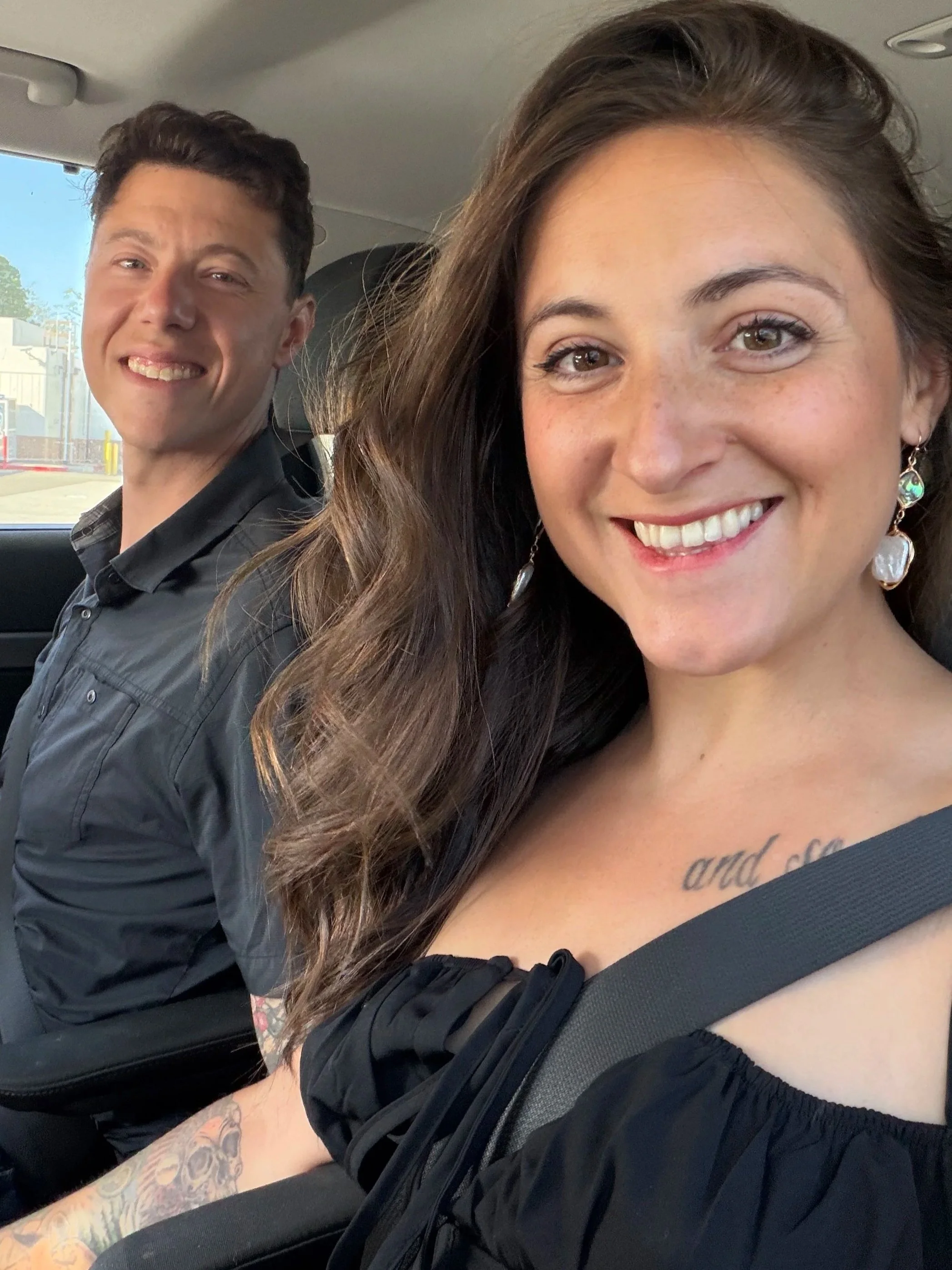
Spoiler! My current fiance is Person A. And I am the happiest and most securely attached I have ever been. I didn’t think that it was possible that someone could change attachment styles when I read Attached by Amir Levine, but I guess I proved myself wrong. Do I still have some anxiously attached tendencies? Yes, but it really only becomes front and center when my insecurities do the same.
Note: I did not diagnose my partner nor myself. A licensed professional did. If you or someone you love are potentially codependent, I suggest seeing a licensed professional to address your concerns.
Anyways, I think that my and my fiance’s codependency make us better lovers, specifically for each other. Honestly!
His codependency works for me because his learned behavior is emotional attunement which stimulates him to ask about my feelings and truly listen when I’m upset. This provides me with a sense of security that he is invested in hearing my thoughts and perspectives, and loves me even when I may be considered “too emotional” in someone else’s eyes. And because of that, I don’t doubt or invalidate myself as much, which has provided me with the emotional & mental space to process my feelings, not repress them.
Since I now know that this behavior stems from his codependency, I can make sure to clarify to him that my feelings are NOT his responsibility to manage. He doesn’t have to fix my mood, or be on edge anticipating my next negative emotion.
My codependency works for him because when I am overly critical of my body, my self-esteem and sex drive tank because I am thinking, “I don’t want to make him walk down the street with THAT [pointing to my belly fat in the mirror], let alone have sex with it!” However, when I am working out and taking care of my mental health, I feel sexier, more confident, and more lovable. With both of us having rather high sex drives, these behaviors are extremely impactful to the overall quality of our relationship. The benefits for both of us are quite obvious here.
Ultimately, we are both doing these things for the wrong reasons. So, don’t get me wrong. Codependency is mostly unhealthy and something that should be addressed. However, just because your girlfriend wants to “do everything with you” doesn’t make her codependent.
Let me give you a mini [c]literature review…
Initially, the term codependency was used in the context of alcoholism or substance abuse to describe the spouses and/or children of alcoholics who inadvertently enabled them (Cermak, 1991; Hands & Dear, 1994; Harper & Capdevilla, 1990; Miller, 1994; Whitfield, 1984; Wormer, 1989).
Although one single definition of codependency is not collectively and wholeheartedly agreed upon, the most common definition of codependency is that it is “a psychosocial condition manifested through a dysfunctional pattern of relating to others” (Spann & Fischer, 1990, p. 27). It is characterized by extreme focus on others, lacking expression of feelings, and using relationships as a way to derive a sense of purpose.
Two of the most common characteristics of codependent individuals are caretaking/self-sacrificing, and dependency/approval seeking (Dear & Roberts, 2002). These are also very feminine characteristics, which has stimulated an argument that codependency as a “condition” is an attack on femininity. I can see this strong correlation, and an article published in Sex Roles - A Journal of Research (2002) seemed to support this hypothesis. This doesn’t mean that men can’t or don’t exhibit these characteristics of codependency as well.

Cullen & Carr (1999) found that individuals with high codependency reported more difficulties in communication, roles, involvement, expression of emotions & issues of control, and differing values or expectations within their relationships. Scientists have agreed that the following symptoms result from codependency: low self-esteem (Martsolf et al., 2000; Stafford, 2001), caretaking, control (Springer et al., 1998), dependency (Hoenigmann-Lion & Whitehead, 2007; Knapek et al., 2017), people pleasing, poor boundaries, reactivity, dysfunctional communication, obsessions, denial, problems with intimacy and relationships, and depression and anxiety (Hughes-Hammer et al., 1998, Vlaicu and Haidu, 2020). Multiple studies have shown that codependent individuals are sensitive to negative feedback and more prone to anxiety and vulnerability.
Codependent behaviors are suggested to have stemmed from coping mechanisms developed in response to past experiences, unmet emotional needs, or a desire for emotional safety. Within an intimate relationship, they may begin as attempts to establish emotional safety and connection, but over time, they can interfere with an individual’s ability to maintain healthy boundaries, meet their own needs, and develop mutually fulfilling relationships.
Vlaicu and Haidu (2020) also refer to codependency as love addiction, and present the signs of it as:
Always craving and searching for a romantic partner (I think the longest I’ve ever been single is 2 weeks)
Being with someone who is non-committal or emotionally unavailable (my ex-husband was Person B above)
Consistently striving to re-achieve or maintain the honeymoon phase in your relationship (I dwell on it and compare current feelings all the time)
Fear that your partner will leave (anxious attachment style, Hello!)
Choosing a romantic partner over literally everyone and everything else (It’s me, hi. I’m the problem. It’s me)
Compromising your values or beliefs in order to keep a significant other (not so much me. I’m quite stubborn when it comes to this)
Using sex & fantasies to avoid loneliness (I couldn’t sit alone with myself until I was in my 30s)
Choosing abusive, demanding, or dependent/vulnerable partners (This one doesn’t quite resonate with me unless you count my current fiance with codependency)

Not all hope is lost, though. Studies indicate that codependency is a learned behavior, likely stemming from childhood coping mechanisms, that can be unlearned through self-healing, self-care, and self-love. Vlaicu and Haidu (2020) presented the following steps as therapeutic approaches to heal from codependency:
Be honest - express your needs & desires
Train your brain to think positively of yourself and your actions
Don’t take things personally & accept each other as you are without trying to “fix” or change them
Socialize! Have friends outside of your partnership
Therapy - an unbiased third party can notice codependent tendencies & actions
Peer support [or coaching 😉] can help with accountability of breaking codependent behavior patterns
Boundaries - you may thrive off guilt & feel bad when you don’t put others first. Identify your boundaries & stick to them
Self-care - give yourself space to grow and thrive
If you’re in a relationship where codependency feels present, be patient, loving, and forgiving towards each other. Explore gently and within each other’s boundaries to figure out what each person needs, and how to best provide support without judgement or guilt. Consider getting help either from a professional coach, such as myself, or talk to your therapist about working through the behaviors that are impacting you.
Rather than automatically viewing these behaviors as personal flaws, it is important to consider cultural expectations, childhood experiences, and learned beliefs about self-care and prioritizing others. Recognizing their origins can be an important step toward healing and developing healthier relationship dynamics.
Two resources that are regularly used in codependency assessments are the Spann Fischer Codependency Scale (SF CDS) and the Friel Codependency Scale (FCS). If you’d like to see where you fall onto these scales, I am happy to administer the assessment and explain your results as well as what this may mean for your relationships and exploration of future love.
*For full reference citations, feel free to email me.
