
Diminishment Proclivities
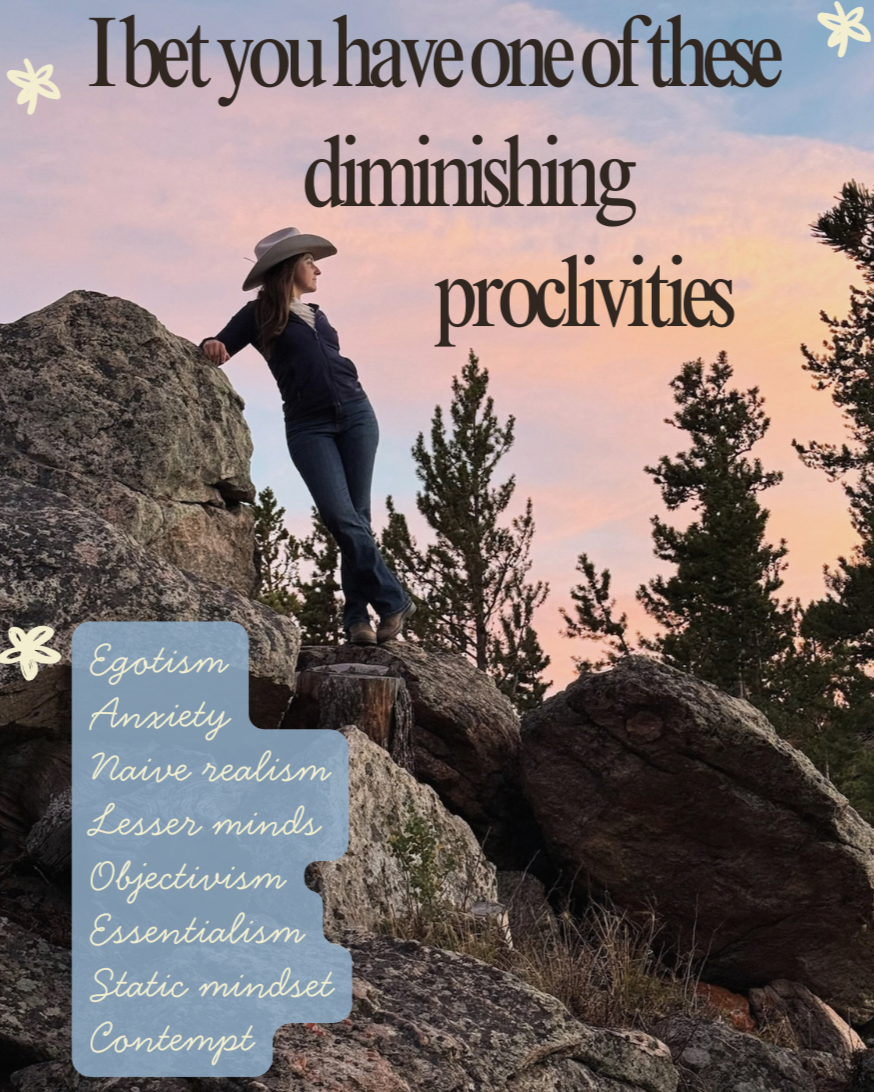
I just started the book "How to Know a Person" by David Brooks. In it, he expresses what NOT to do to perceive others accurately. This list of behaviors he refers to as Diminishment Proclivities which are incredibly helpful to recognize in yourself. A proclivity is a natural, habitual, or deep-seated tendency, inclination, or predisposition toward a particular activity, behavior, or thing, often carrying a connotation of a strong natural lean toward something objectionable, bad, or morally questionable. A diminishing proclivity, in the context of David Brooks’ book, is when those actions result in making someone else smaller, insignificant, or invaluable.
I am ALL about calling myself out, and I recommend you doing the same for yourself in order to learn and grow with one huge caveat - FORGIVE yourself. Recognize if you have any of the following behaviors, determine for yourself why you do that, establish with yourself that you don’t want to be that way, determine how you will combat those behaviors, and then forgive yourself for doing them.
If you notice that these are mindsets or behaviors that you exhibit towards your partner, talk to them about it, and maybe even apologize. It’s important to know what being loved by you feels like. Behaviors with an asterisk* are behaviors that I will admit that I have done. I’m not perfect either.
Egotism - too self centered to try
Do you correct your partner more than you appreciate them?
Do you focus so much on what is missing that you fail to acknowledge what is present?
Anxiety* - so much noise in your own head that you can’t hear others.
When they’re upset, do you try to fix, rationalize, minimize, or explain their feelings instead of simply hearing them?
Are you always analyzing yourself and how you’re coming across?
Naive realism - the way the world appears to you is the objective view & everyone else must see the same reality you do
When your partner shares an idea, do you immediately explain why it won’t work?
Lesser minds - perception that you are much more interesting/complicated/deeper than others
Do you interrupt them because you already know what they’re going to say?
Do you think that your partner couldn’t possibly have a valid perspective you haven’t considered?
Do you believe that if your partner understood what you understand, they would agree with you?
Objectivism - treating your own values as the only correct ones.
Do you assume that your solution is the best solution because it seems the most logical to you?
Do you find yourself explaining the “correct” interpretation of your partner's experience to them?
Do you believe you’re “just looking at the facts,” or that your partner simply sees things differently?
Can you allow your partner to have a different reality without needing to correct it?
Essentialism* - Assuming that the category that a person may fall into, or the generalization you made about a person tells you everything you need to know about them.
Do you believe that your partner’s behavior tells you exactly who they are?
When your partner does something you dislike, do you criticize the behavior—or their character?
Do you hold onto old examples because they confirm something you already believe about your partner?
Are you responding to the person standing in front of you - or to the version of them you’ve decided exists?
Static mindset* - to know someone at 1 point & not update your view of them as they grow/change
Do you keep score?
Do you bring up their past mistakes?
Again, the point here is to notice what tendencies you have. Explore yourself and what being loved by you may feel like. Talk to your partner and strive to be better for them and for you.
Consider: Does the person you love feel bigger, safer, more confident, and more valued because they're with you—or do they feel like they're perpetually falling short?
Then, repair. Repair with yourself as well as with your partner. Everyone deserves love and respect. Sometimes we just need to slow down and remind ourselves what we want our amore to look like.
